
CPO Certified Pool Operator and Owner of Paradise Pool Service LLC
Published
·
Updated:
·
CPO Certified Pool Operator and Owner of Paradise Pool Service LLC
Published
·
Updated:
·
Mustard algae is one of the most frustrating pool problems to deal with.
It doesn’t look like typical green algae. Instead, it shows up as a yellow or brown dust that clings to pool walls, especially in shaded areas. It often comes back even after cleaning, which is why many pool owners struggle to get rid of it completely.
To fix it properly, you need to understand what’s actually causing it.
Mustard algae is a chlorine-resistant form of algae.
It usually appears as:
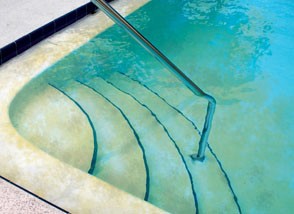
Yellow or brown patches along walls
Dusty buildup on steps and corners
A layer that brushes off easily but returns quickly
Unlike regular algae, it can survive normal chlorine levels and hide in areas that don’t get much sunlight.
The most common cause is not maintaining consistent chlorine.
If chlorine levels drop even briefly:
Algae spores begin to grow
Sanitization becomes ineffective
Growth spreads quickly in low-circulation areas
Mustard algae takes advantage of these gaps, even if the pool looks fine at first.
Areas with weak water movement are ideal for algae growth.
Common spots include:
Behind ladders
Along steps
In corners and tight angles
Shaded walls
If water is not circulating properly, chlorine never fully reaches these areas.
Mustard algae clings to surfaces.
If the pool is not brushed regularly:
Algae attaches to walls and floors
It builds up in layers
Chemicals cannot fully penetrate it
Brushing is what exposes algae so chlorine can actually kill it.
This is one of the biggest reasons mustard algae keeps coming back.
It can live on:
Pool brushes
Vacuum heads
Floats and toys
Swimsuits and towels
Even if you treat the pool, reintroducing contaminated items can restart the problem.
Mustard algae thrives in:
Warm temperatures
Direct sunlight combined with shaded areas
Late spring and summer conditions
These conditions create the perfect environment for growth, especially if maintenance is inconsistent.
If your filter is not working properly:
Dead algae is not removed
Spores continue circulating
Water never fully clears
A dirty or inefficient filter allows algae to keep spreading even after treatment.
Phosphates act as food for algae.
They enter your pool through:
Rainwater
Dirt and debris
Fertilizer runoff
Organic material
Even if chlorine is present, high phosphate levels make it easier for algae to grow back.
This type of algae is harder to eliminate because it:
Resists normal chlorine levels
Clings to surfaces
Spreads through contaminated items
Survives in low-circulation areas
If all sources are not addressed, it will return.
To fully remove it, you need to:
Brush all affected surfaces thoroughly
Shock the pool with a higher chlorine dose
Clean or replace contaminated equipment
Run the filter continuously
Vacuum and remove debris
Treat phosphates if levels are high
Skipping any of these steps usually leads to the algae coming back.
Mustard algae is not just a surface problem.
It is a combination of water chemistry, circulation, and contamination that allows it to grow and return.
The key is not just killing what you see, but removing the conditions that allow it to survive.
Once those are controlled, it becomes much easier to keep your pool clear
Ed Garcia is the owner of Paradise Pool Service LLC, a family-owned pool service company based in Fairfax, VA. With over 20 years of hands-on experience servicing residential and commercial pools across Washington DC and Northern Virginia, Ed leads a team trusted by 150+ pool owners across the DMV area.