
CPO Certified Pool Operator and Owner of Paradise Pool Service LLC
Published
·
Updated:
·
CPO Certified Pool Operator and Owner of Paradise Pool Service LLC
Published
·
Updated:
·
Pool coping is one of the most overlooked parts of a pool.
Most people see it as just the decorative edge around the pool, but it actually plays a critical role in protecting the structure, supporting the deck, and keeping water from causing hidden damage.
Because it sits right at the edge, coping takes constant exposure from water, weather, and foot traffic. Over time, it starts to wear down.
The problem is, coping issues usually start small. A minor crack or loose piece doesn’t seem urgent until it turns into structural damage or costly repairs.
Let’s break down the key signs that your pool coping may need to be replaced.
Pool coping is the material installed along the top edge of your pool, creating the transition between the pool shell and the surrounding deck.
It serves several important functions:
Protects the pool shell from water intrusion
Directs water away from the pool structure
Provides a safe, finished edge
Supports the connection between pool and deck
Improves the overall look of the pool
When coping starts to fail, it affects more than just appearance.
Coping is built to handle:
Constant water exposure
Temperature changes and expansion
Foot traffic and daily use
Pool chemical exposure
Weather and seasonal shifts
Over time, these conditions break down materials, especially if the coping was installed incorrectly or has simply aged.
Most pools show clear warning signs before coping fails completely.
Here’s what to look for:
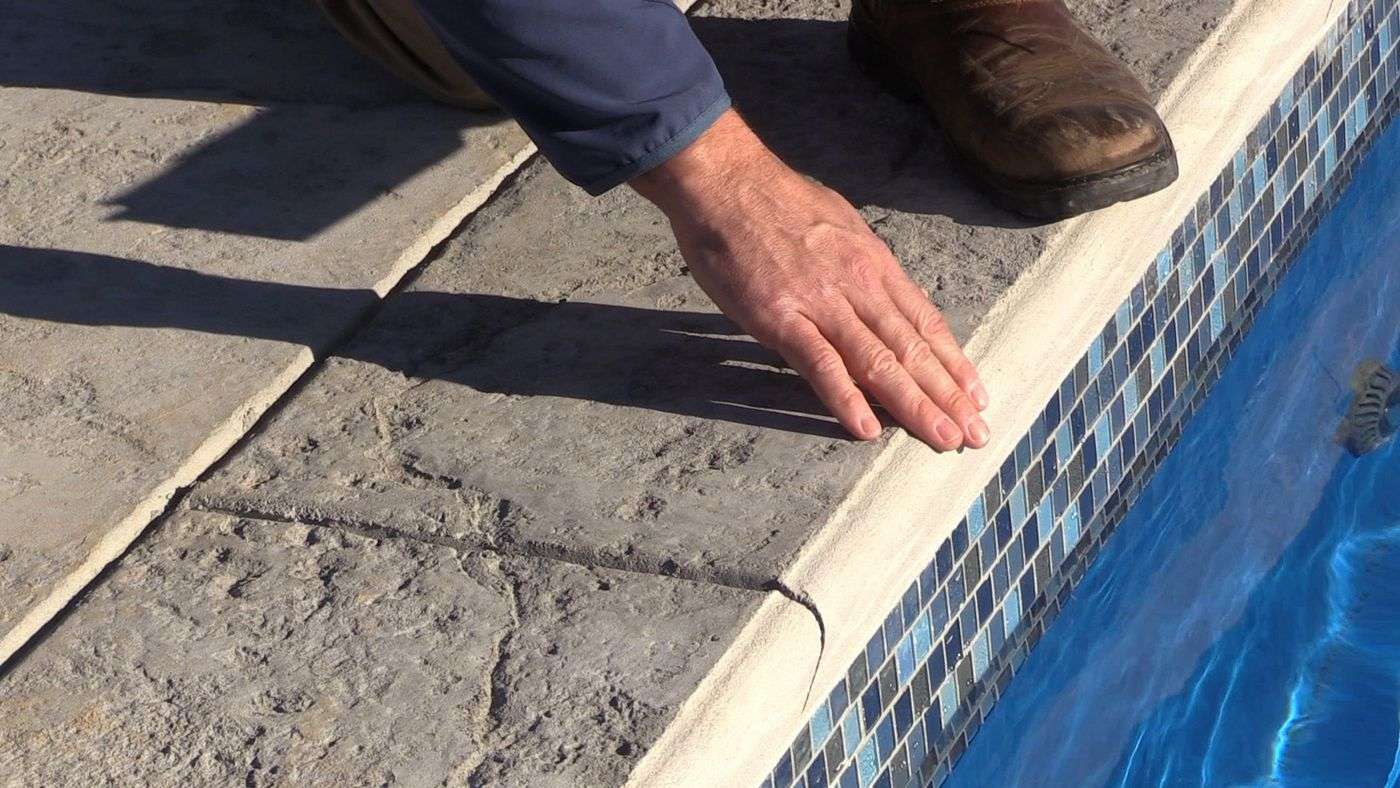
Visible cracks are one of the most obvious signs.
Small cracks can quickly spread, especially with temperature changes and water exposure. Once cracking starts, the integrity of the coping is compromised.
If coping stones move when stepped on or feel unstable, the base underneath may be failing.
This is more than a cosmetic issue. Loose coping creates safety risks and can lead to further structural damage.
When you start to see separation between the coping and the deck, it’s a sign that things are shifting.
These gaps allow water to seep in, which can lead to:
Erosion behind the pool
Deck movement
Long-term structural issues
One of the most serious signs is water intrusion.
If water is getting behind the coping, it can damage the pool shell and surrounding structure. This often goes unnoticed until it becomes a larger problem.
Even if there are no major structural issues yet, heavily worn coping is a sign it’s nearing the end of its lifespan.
Discoloration, chipping, and general wear all indicate that replacement may be the better long-term option.
Not every issue requires full replacement.
You may NOT need new coping if:
The issue is limited to minor surface staining
Only small areas are affected
The structure underneath is still solid
Joints just need resealing
In these cases, repairs or maintenance may be enough.
The process is straightforward but requires proper preparation.
Step 1: Remove Existing Coping
Damaged coping is carefully removed without affecting the pool structure.
Step 2: Prepare the Base
The foundation is cleaned and leveled to ensure proper installation.
Step 3: Install New Coping
New materials are installed, aligned, and secured.
Step 4: Seal and Finish
Edges are sealed to prevent water intrusion and ensure durability.
After replacing coping, most pools have:
A clean, finished edge
Improved safety around the pool
Better protection against water damage
A more updated and cohesive look
Stronger connection between pool and deck
Most pool coping lasts:
10 to 20 years depending on material
Longer with proper installation and maintenance
Factors that affect lifespan include:
Weather exposure
Pool usage
Material type
Installation quality
Ignoring coping damage can lead to:
Water damage behind the pool structure
Deck shifting and separation
Increased repair costs
Safety hazards
Full structural repairs instead of simple replacement
Small issues rarely stay small.
Coping installation requires:
Proper base preparation
Accurate alignment
Structural awareness
Correct sealing
Mistakes can lead to:
Uneven edges
Water intrusion
Early failure
Additional repair costs
This is a job best handled professionally.
Coping is not part of routine maintenance, but it should be monitored.
To extend its lifespan:
Check for cracks or movement regularly
Keep joints properly sealed
Address small issues early
Maintain proper drainage around the pool
Preventative care reduces the need for full replacement.
If your coping looks worn, cracked, or unstable:
Start with:
A visual inspection
Checking for movement or gaps
Looking for signs of water intrusion
If issues go beyond surface-level wear, replacement is usually the best long-term solution.
Pool coping is more than a finishing touch. It’s a key part of your pool’s structure, safety, and long-term durability.
When it starts to fail, the effects go beyond appearance and can lead to more serious problems if ignored.
Catching the signs early and addressing them properly helps protect your pool and avoid more expensive repairs down the line.
Ed Garcia is the owner of Paradise Pool Service LLC, a family-owned pool service company based in Fairfax, VA. With over 20 years of hands-on experience servicing residential and commercial pools across Washington DC and Northern Virginia, Ed leads a team trusted by 150+ pool owners across the DMV area.