
CPO Certified Pool Operator and Owner of Paradise Pool Service LLC
Published
·
Updated:
·
CPO Certified Pool Operator and Owner of Paradise Pool Service LLC
Published
·
Updated:
·
Pool caulking is one of the most overlooked parts of pool maintenance.
Most people don’t think about it until something starts going wrong. Some assume it’s just cosmetic. Others don’t realize it plays a critical role in protecting the pool structure.
In reality, caulking is what seals the expansion joint between your pool and deck.
When it fails, water can get underneath and cause serious damage.
Let’s break down the signs that your pool caulking needs to be replaced before it turns into a bigger problem.
Pool caulking is installed in the expansion joint between the pool and the surrounding deck.
This joint allows both structures to expand and move independently.
Caulking is designed to:
Seal out water
Allow flexible movement
Prevent debris from entering the joint
Protect the soil and structure underneath
Without it, water can seep below the surface and begin causing damage you can’t immediately see.
Caulking doesn’t last forever.
Over time, it breaks down due to:
UV exposure
Weather changes and temperature swings
Constant expansion and contraction
Water exposure
General aging of materials
Once it starts to fail, it usually gets worse quickly.
This is the most obvious sign.
If the caulking looks:
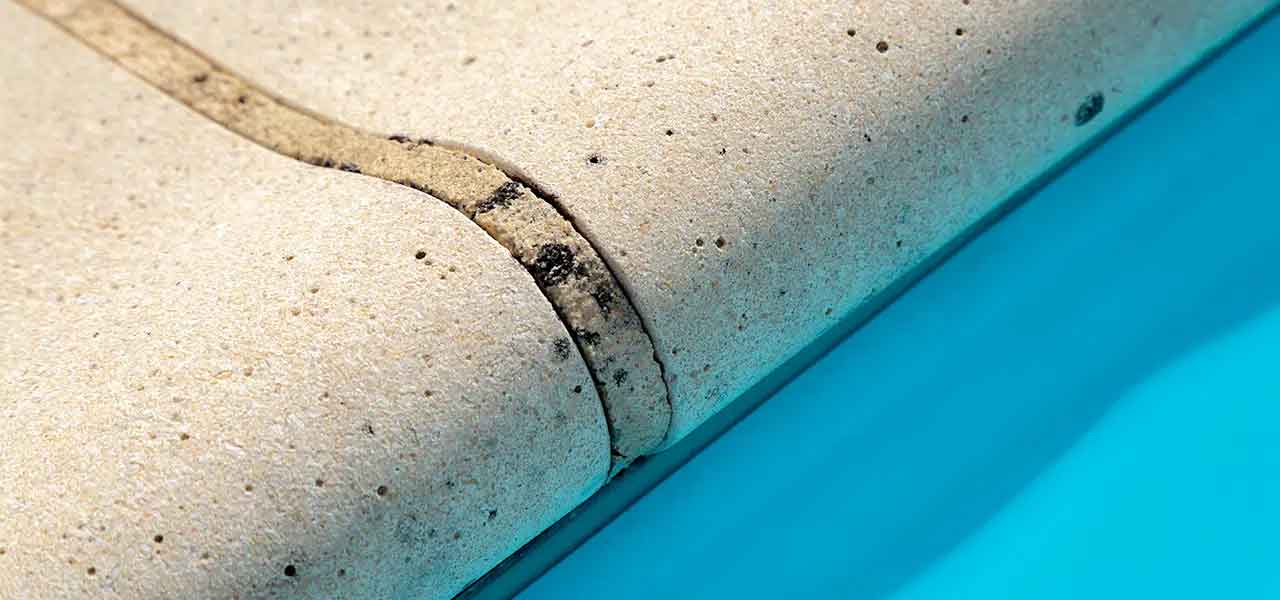
Cracked
Hardened
Dry or splitting
It’s no longer flexible, which means it’s no longer doing its job.
Caulking needs to stretch with movement. Once it becomes rigid, it fails.
If you can see open space in the joint, that’s a problem.
Gaps allow:
Water to flow underneath the pool
Soil to shift or erode
The deck to move unevenly
Even small gaps can lead to bigger structural issues over time.
Sometimes the caulking is still there, but it’s no longer bonded properly.
You might notice:
Edges lifting
Separation from the concrete
Shrinking within the joint
This creates hidden entry points for water, even if it doesn’t look completely damaged at first glance.
If water sits in the joint or disappears into it, the seal is compromised.
This is one of the most important warning signs.
Water intrusion can lead to:
Soil erosion
Structural shifting
Long-term damage beneath the surface
By the time you notice visible damage, the problem is often already advanced.
If you see weeds growing or debris collecting inside the joint, it means the seal is no longer intact.
A properly sealed joint should:
Stay clean
Keep debris out
Remain tightly sealed
Once it opens up, it becomes a collection point for dirt and moisture.
Not every issue around your pool is a caulking problem.
You typically do NOT need new caulking for:
Surface cracks in the deck (not at the joint)
Minor cosmetic imperfections
Water splashing or runoff outside the joint
Issues unrelated to the expansion joint
The key is whether the joint itself is failing — not just the surrounding area.
Replacing pool caulking is straightforward but needs to be done properly.
Step 1 Remove Old Caulking
All damaged material is fully removed
Step 2 Clean and Prep the Joint
Debris, dirt, and moisture are cleared out
Step 3 Install Backer Rod (if needed)
Ensures proper depth and flexibility
Step 4 Apply New Caulking
Flexible sealant is applied evenly
Step 5 Smooth and Finish
Creates a clean, sealed, professional result
Each step is important to ensure long-term performance.
Damaged caulking is not just a small issue.
Over time, it can lead to:
Water damage beneath your pool and deck
Soil erosion and shifting
Cracks in concrete or structure
Expensive repairs that could have been avoided
What starts as a simple fix can turn into a major problem if ignored.
Most pool caulking lasts:
5 to 10 years depending on conditions
You may need replacement sooner if:
Your pool gets heavy sun exposure
You experience frequent temperature changes
The original installation was poor
Regular inspection helps catch issues early.
It may look simple, but proper caulking requires precision.
Common DIY mistakes include:
Improper surface preparation
Using the wrong materials
Incorrect depth or application
Poor sealing that fails quickly
If it’s not done correctly, it won’t last — and the problem comes back.
Caulking is not routine maintenance, but it is critical protection.
To extend its life:
Keep joints clean
Watch for early signs of damage
Address issues quickly
Maintain proper drainage around the pool
Catching it early keeps costs low and prevents bigger issues.
If you’re seeing any of these signs, don’t wait.
Start with:
A visual inspection of the joint
Checking for gaps, cracks, or separation
Looking for signs of water intrusion
If the caulking is failing, replacing it early is the simplest and most cost-effective solution.
Pool caulking is easy to ignore, but it plays a major role in protecting your pool.
It’s not just about appearance — it’s about preventing water damage and structural issues.
When it starts to fail, the problems don’t stay small for long.
Catching it early and fixing it properly keeps your pool protected and avoids much bigger repairs later.
Ed Garcia is the owner of Paradise Pool Service LLC, a family-owned pool service company based in Fairfax, VA. With over 20 years of hands-on experience servicing residential and commercial pools across Washington DC and Northern Virginia, Ed leads a team trusted by 150+ pool owners across the DMV area.