
CPO Certified Pool Operator and Owner of Paradise Pool Service LLC
Published
·
Updated:
·
CPO Certified Pool Operator and Owner of Paradise Pool Service LLC
Published
·
Updated:
·
Rain can change your pool water much faster than most homeowners realize.
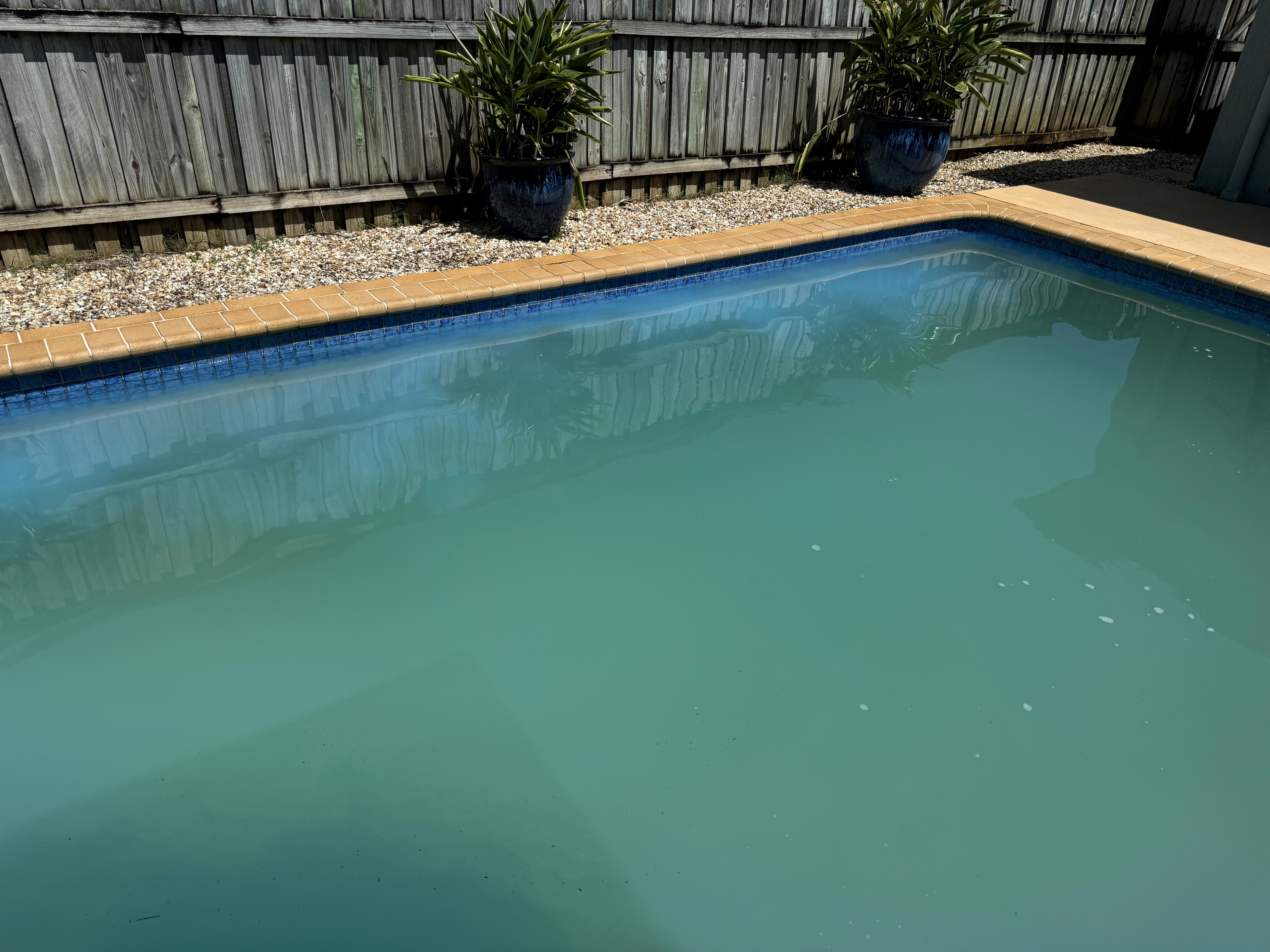
Many pool owners wake up after a storm expecting the pool to look the same, only to find cloudy, murky, or slightly green water the next morning.
The rain itself is usually not the only problem. Storms introduce debris, contaminants, and water chemistry changes that can quickly affect clarity and sanitation.
Understanding why pool water gets murky after it rains helps you correct the issue faster and prevent larger water quality problems from developing.
Heavy rain adds a large amount of fresh water into the pool.
As this happens, important chemical levels become diluted, including:
Chlorine
Stabilizer
Alkalinity
Salt levels
Water balance
Lower sanitizer levels make it easier for contaminants and algae to begin spreading shortly after the storm passes.
Even pools that looked perfectly clean before the rain can become cloudy once chlorine levels drop too far.
Storms usually bring more than just water into the pool.
Rain and wind often introduce:
Dirt
Leaves
Pollen
Grass clippings
Insects
Organic debris
As this material breaks down, it increases the demand on both the filtration system and sanitizer levels.
The more debris sitting in the water, the murkier the pool often becomes.
Rainwater carries contaminants from surrounding surfaces directly into the pool.
This can include:
Fertilizer runoff
Dust and soil
Oils
Bacteria
Phosphates
These contaminants affect water clarity and can create ideal conditions for algae growth if the pool is not cleaned quickly afterward.
After heavy rain, the filtration system often has to work much harder than normal.
Large amounts of debris and fine particles quickly clog the filter and reduce circulation efficiency.
Common problems include:
Dirty filter cartridges
Increased filter pressure
Reduced water flow
Fine debris remaining suspended
If the filter is already dirty before the storm, murky water problems usually become worse afterward.
Rainstorms often create ideal conditions for algae growth.
This happens because storms usually combine:
Lower chlorine levels
Warm temperatures
Increased contaminants
Poor sunlight penetration
Weak circulation
In some cases, pools begin developing algae within a day or two after a heavy storm if water chemistry is not corrected quickly.
Some storm debris is too small to settle immediately.
This includes:
Dust
Pollen
Soil particles
Dead organic material
These fine particles remain suspended in the water and create a dull or murky appearance even if larger debris has already been removed.
Proper filtration and circulation are usually needed to fully clear the water again.
Pools with weak circulation often struggle more after storms.
Low-flow areas allow contaminants to collect and remain trapped in certain sections of the pool.
Common circulation issues include:
Dirty filters
Weak pump performance
Clogged skimmer baskets
Improper return jet positioning
Without strong circulation, cloudy water often lingers much longer after rainfall.
Most pools show obvious signs when rainwater has disrupted water quality.
Common symptoms include:
Cloudy or dull water
Green tint developing
Debris buildup on the floor
Weak chlorine readings
Increased filter pressure
Slippery pool surfaces
The earlier these problems are addressed, the easier cleanup becomes.
The best way to prevent murky water is by responding quickly after the storm passes.
Important post-rain maintenance steps include:
Testing water chemistry
Adjusting chlorine levels
Skimming debris
Brushing pool surfaces
Vacuuming settled debris
Running the pump longer
Cleaning or backwashing the filter if needed
Quick maintenance helps prevent small clarity issues from turning into larger algae problems.
Pools with strong maintenance routines usually recover from storms much faster.
This often depends on:
Proper water balance before the rain
Clean filtration systems
Good circulation
Consistent sanitizer levels
Regular debris removal
Well-maintained pools are far more resistant to storm-related water quality problems.
Some post-storm water problems become difficult to correct without professional help.
You should contact a pool professional if:
Water remains cloudy for several days
Algae begins developing
Filtration problems appear
Chlorine levels will not stabilize
Debris overload becomes severe
Professional treatment can often restore water clarity much faster when storms create larger maintenance issues.
Rain can affect pool water much more than most homeowners expect. Diluted chemicals, debris buildup, filtration strain, and increased contaminants all contribute to murky water after storms.
Acting quickly after heavy rain helps restore water clarity, protect sanitation levels, and prevent algae from developing.
Consistent maintenance before and after storms makes a major difference in how well your pool handles changing weather conditions.
Ed Garcia is the owner of Paradise Pool Service LLC, a family-owned pool service company based in Fairfax, VA. With over 20 years of hands-on experience servicing residential and commercial pools across Washington DC and Northern Virginia, Ed leads a team trusted by 150+ pool owners across the DMV area.