
CPO Certified Pool Operator and Owner of Paradise Pool Service LLC
Published
·
Updated:
·
CPO Certified Pool Operator and Owner of Paradise Pool Service LLC
Published
·
Updated:
·
Pool chemical timing is one of the most overlooked parts of pool care.
Most homeowners focus on what to add, but not when to add it or how long to wait. That’s where problems start.
Swimming too soon, stacking chemicals too quickly, or ignoring circulation time can lead to:
Cloudy water
Skin and eye irritation
Chemicals not working properly
Dangerous chemical reactions
In Northern Virginia, Washington DC, and Maryland, this becomes even more important because:
Summer heat speeds up chemical reactions
Storms frequently disrupt water balance
Heavy pool use increases contamination
Here’s a simple, practical guide to help you understand when it’s safe to swim and how to properly space out chemicals.
Pool chemicals don’t work instantly.
They need time to:
Dissolve and circulate
React with contaminants
Balance with existing chemistry
If you add chemicals too close together or swim too soon, you risk:
Ineffective treatment
Wasted chemicals
Unsafe swimming conditions
These are general guidelines for residential pools in Virginia climates.
Safe swim time:
15–30 minutes for normal dosing
Up to 4 hours for shock treatments
What to know:
High chlorine levels are common after storms in Virginia summers
Always wait until chlorine returns to normal range before swimming
Safe swim time:
30 minutes to 1 hour
What to know:
These chemicals are strong and fast-acting
Must fully circulate to avoid concentrated areas
Safe swim time:
Around 15–30 minutes
What to know:
Works best when chlorine levels are stable
Adding during high chlorine periods reduces effectiveness
Safe swim time:
20–60 minutes
What to know:
Helps your filter remove fine particles
Needs circulation to fully activate
Safe swim time:
Do NOT swim until fully removed
What to know:
Used after storms or heavy algae
Requires pump shutdown and vacuuming
Swimming during this phase will disrupt the process
Safe swim time:
30 minutes to 4 hours depending on product
What to know:
These stabilize water balance
Must be fully dissolved before swimming
This is where most mistakes happen.
General rule:
Wait at least 10–15 minutes between most chemicals
Wait 30+ minutes for strong chemicals like acid
Wait several hours after shock treatments
Never add multiple chemicals at the same time.
Some chemicals should never be added back-to-back.
Be especially careful with:
Chlorine + acid
Shock + stabilizer
Floc + any other chemical
These combinations can:
Cancel each other out
Cause rapid pH swings
Create unsafe conditions
Spacing matters.
Pools in Northern Virginia, DC, and Maryland deal with:
Frequent rainstorms that dilute chemicals
High humidity that supports algae growth
Heat that burns off chlorine faster
This means:
You’ll adjust chemicals more often
You need to monitor wait times more carefully
Rushing the process leads to recurring issues
Follow these simple rules every time:
Test your water before adding anything
Add one chemical at a time
Run your pump during and after treatment
Allow full circulation before the next step
Re-test water after adjustments
This keeps your pool stable and prevents problems.
How you add chemicals matters just as much as timing.
Add liquids slowly around the pool perimeter
Pre-dissolve granular chemicals when required
Avoid dumping chemicals in one spot
Keep water moving during application
This prevents concentrated areas and uneven treatment.
Skipping wait times can cause:
Cloudy or unbalanced water
Reduced chlorine effectiveness
Skin and eye irritation
Chemical waste and higher costs
In some cases, it can even create unsafe swimming conditions.
If you want to keep it simple:
Test your water
Adjust pH first
Add sanitizer (chlorine)
Run pump for circulation
Wait before adding anything else
This order solves most issues.
Pay extra attention to timing after:
Heavy rain or storms
Opening your pool for the season
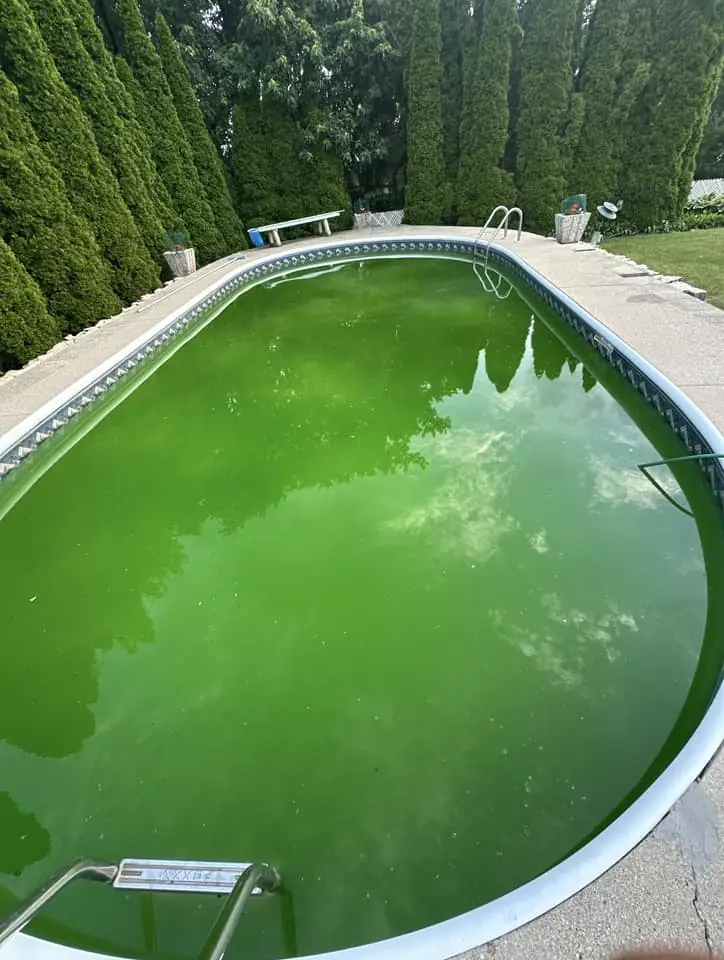
Algae treatment or green pool recovery
Large chemical adjustments
These situations require more precise handling.
Pool chemicals work best when given time to do their job.
Rushing the process is one of the main reasons pools stay cloudy, green, or unbalanced.
In climates like Virginia, where weather and usage constantly affect your pool, proper timing is just as important as proper dosing.
Ed Garcia is the owner of Paradise Pool Service LLC, a family-owned pool service company based in Fairfax, VA. With over 20 years of hands-on experience servicing residential and commercial pools across Washington DC and Northern Virginia, Ed leads a team trusted by 150+ pool owners across the DMV area.