
CPO Certified Pool Operator and Owner of Paradise Pool Service LLC
Published
·
Updated:
·
CPO Certified Pool Operator and Owner of Paradise Pool Service LLC
Published
·
Updated:
·
Pool algae is one of the most common problems homeowners deal with, and one of the most misunderstood.
A lot of people think cloudy water is just a chemical issue. Others assume brushing or adding chlorine will fix it. Some ignore it until the pool turns completely green.
In reality, algae is a living organism. If it’s not treated properly, it spreads quickly and becomes harder and more expensive to remove.
Let’s break down how to tell if your pool has algae, what causes it, and how to fix it the right way.
Algae is a microscopic plant that grows in water.
It thrives in pools when:
Water chemistry is unbalanced
Sanitizer levels are too low
Circulation is poor
Debris is left sitting in the pool
Once it starts growing, it spreads across surfaces and into the water.
That’s why algae problems tend to get worse fast.
Algae doesn’t always start with a green pool.
Most pools show subtle signs first, like:
Water losing its clear, bright look
Slight green or yellow tint
Walls or steps feeling slightly slippery
Small patches forming in corners or shady areas
At this stage, it’s easier to fix, but it’s also easy to overlook.
If it’s not treated early, algae becomes obvious.
You’ll start to notice:
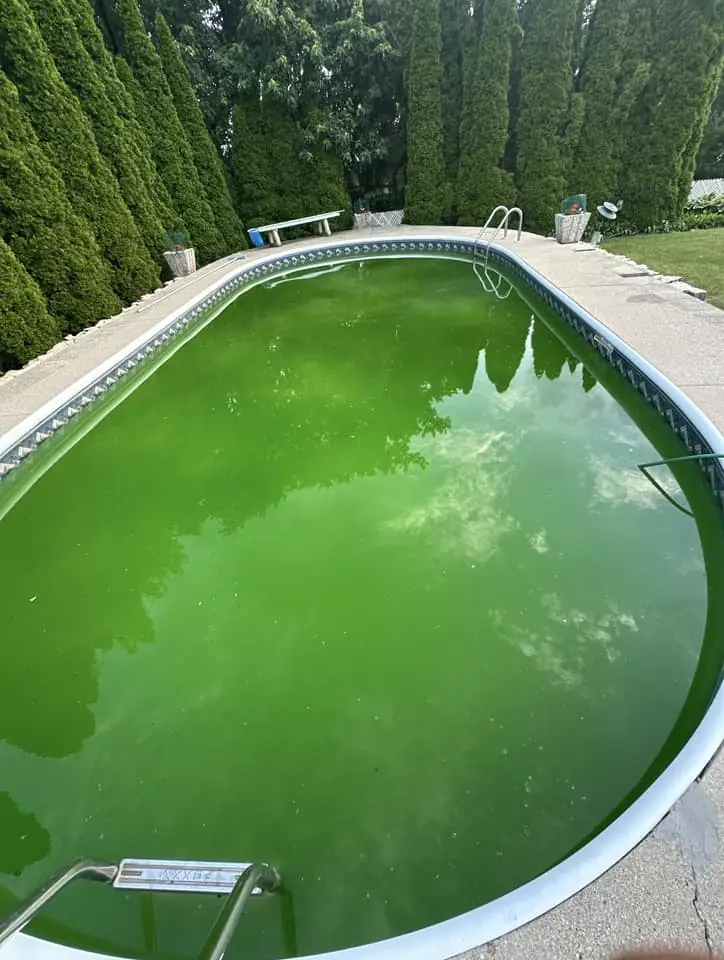
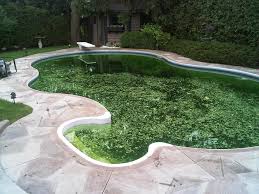
Green, cloudy, or discolored water
Visible algae on walls, steps, or floor
Slimy surfaces throughout the pool
Strong chlorine smell from imbalance
Poor visibility in deeper areas
At this point, basic cleaning usually won’t fix the problem.
Not all algae looks the same.
The most common type
Turns water green and cloudy
Spreads quickly but is easier to treat
Clings to walls and shady areas
More resistant to chlorine
Often returns if not treated fully
Appears as dark spots
Roots into pool surfaces
The hardest type to remove
Each type requires a slightly different approach.
Algae growth usually comes down to a few core issues:
Low chlorine or sanitizer levels
Unbalanced water chemistry
Poor circulation or filtration
Debris sitting in the pool
Hot weather and sunlight
Even one of these can trigger algae growth. A combination makes it worse.
One of the biggest frustrations homeowners have is algae returning after treatment.
This usually happens because:
The root of the algae wasn’t fully killed
Water chemistry wasn’t properly balanced
The filter wasn’t cleaned
Circulation issues weren’t addressed
Killing visible algae isn’t enough. The conditions that caused it need to be fixed too.
In mild cases, sometimes.
Basic steps include:
Brushing affected areas
Shocking the pool
Running the filtration system continuously
Balancing water chemistry
But for more serious cases, DIY often falls short.
Heavy algae growth usually requires:
Stronger treatment methods
Precise chemical balancing
Multiple treatment cycles
That’s where most homeowners run into trouble.
Algae isn’t just about appearance.
Over time, it can:
Clog your filter system
Reduce circulation efficiency
Increase chemical usage
Damage pool surfaces
Create unsafe swimming conditions
What starts as a small issue can turn into a full cleanup or restoration.
Professional algae treatment goes beyond basic cleaning.
It typically includes:
Full water testing and balancing
Targeted algae treatment based on type
Deep brushing and surface cleaning
Filter cleaning or backwashing
Ongoing monitoring to prevent regrowth
The goal is not just to clear the water, but to stabilize the pool long-term.
Prevention is much easier than treatment.
The key is consistency:
Keep water chemistry balanced
Maintain proper chlorine levels
Run your filtration system regularly
Remove debris quickly
Stay on a consistent maintenance schedule
This is why weekly pool maintenance is so important.
If you’re noticing early or advanced signs, don’t wait.
A simple plan:
Check for visible algae or water discoloration
Test your water chemistry
Brush affected areas
Shock the pool if needed
Call a professional if it doesn’t clear
The sooner you act, the easier and cheaper it is to fix.
Pool algae doesn’t fix itself.
What looks like a minor issue can quickly turn into cloudy water, recurring problems, and higher maintenance costs.
The key is catching it early and treating it correctly.
If your pool isn’t as clear as it should be, there’s usually a reason, and it’s worth addressing before it gets worse.
Ed Garcia is the owner of Paradise Pool Service LLC, a family-owned pool service company based in Fairfax, VA. With over 20 years of hands-on experience servicing residential and commercial pools across Washington DC and Northern Virginia, Ed leads a team trusted by 150+ pool owners across the DMV area.