
CPO Certified Pool Operator and Owner of Paradise Pool Service LLC
Published
·
Updated:
·
4
CPO Certified Pool Operator and Owner of Paradise Pool Service LLC
Published
·
Updated:
·
4
Pool leaks are one of the most misunderstood problems homeowners deal with.
A lot of people assume water loss is normal. Others think it’s just evaporation or splash-out. Some ignore it completely until the problem gets expensive.
In reality, a leaking pool can quietly waste water, throw off your chemicals, and damage your equipment or structure over time.
Let’s break down how to tell if you actually have a leak, what tests you can do, and what to do next.
All pools lose some water.
Evaporation, weather, and normal use can cause small drops in water level. But there’s a limit.
A general rule:
Up to 1/4 inch per day = normal
More than 1/4 inch per day = worth investigating
If you’re constantly adding water or noticing a steady drop, it’s not something to ignore.
Leaks don’t always show up as something obvious.
Most homeowners notice patterns over time, like:
Adding water more often than usual
Higher water bills without explanation
Trouble keeping chemicals balanced
Air bubbles coming from return jets
Wet spots or soft ground around the pool
Loose tiles or small cracks forming
These signs don’t always confirm a leak, but they’re strong indicators something isn’t right.
This is the simplest way to tell if your pool is leaking.
Here’s how it works:
Fill a bucket with pool water
Place it on a pool step so the water inside matches the pool level
Mark the water level inside the bucket and on the outside (pool level)
Wait 24 hours with the pump off
Compare the levels
If the pool water drops more than the bucket water, there’s a good chance you have a leak.
This test helps separate evaporation from actual water loss.
Another simple method is just tracking your water line.
Mark the water level on your tile or skimmer and check it the next day.
If you’re losing more than about a quarter inch in 24 hours, it’s worth looking into further.
Consistency is what matters here. One hot day isn’t a leak. Repeated loss usually is.
Leaks aren’t always visible.
Sometimes they show up in how your system behaves.
If you notice:
Air bubbles coming from return jets
Pump losing prime
Gurgling or inconsistent flow
That can mean your system is pulling in air through a leak in the plumbing.
Pool leaks usually come from one of two places:
These happen in underground pipes or return lines.
They can be harder to spot and often show up as:
Faster water loss when the system is running
Air in the system
Wet areas away from the pool
These happen in the pool itself.
Common areas include:
Cracks in the pool shell
Around lights and fittings
Tile lines or skimmers
These leaks are often found through visual inspection or dye testing.
This is where most people underestimate the problem.
A small leak doesn’t stay small.
Over time, it can:
Increase your water bill
Drive up chemical costs
Damage pumps, filters, and heaters
Cause soil erosion under your pool
Lead to cracks or structural damage
What starts as a minor issue can turn into a much larger repair if it’s left alone.
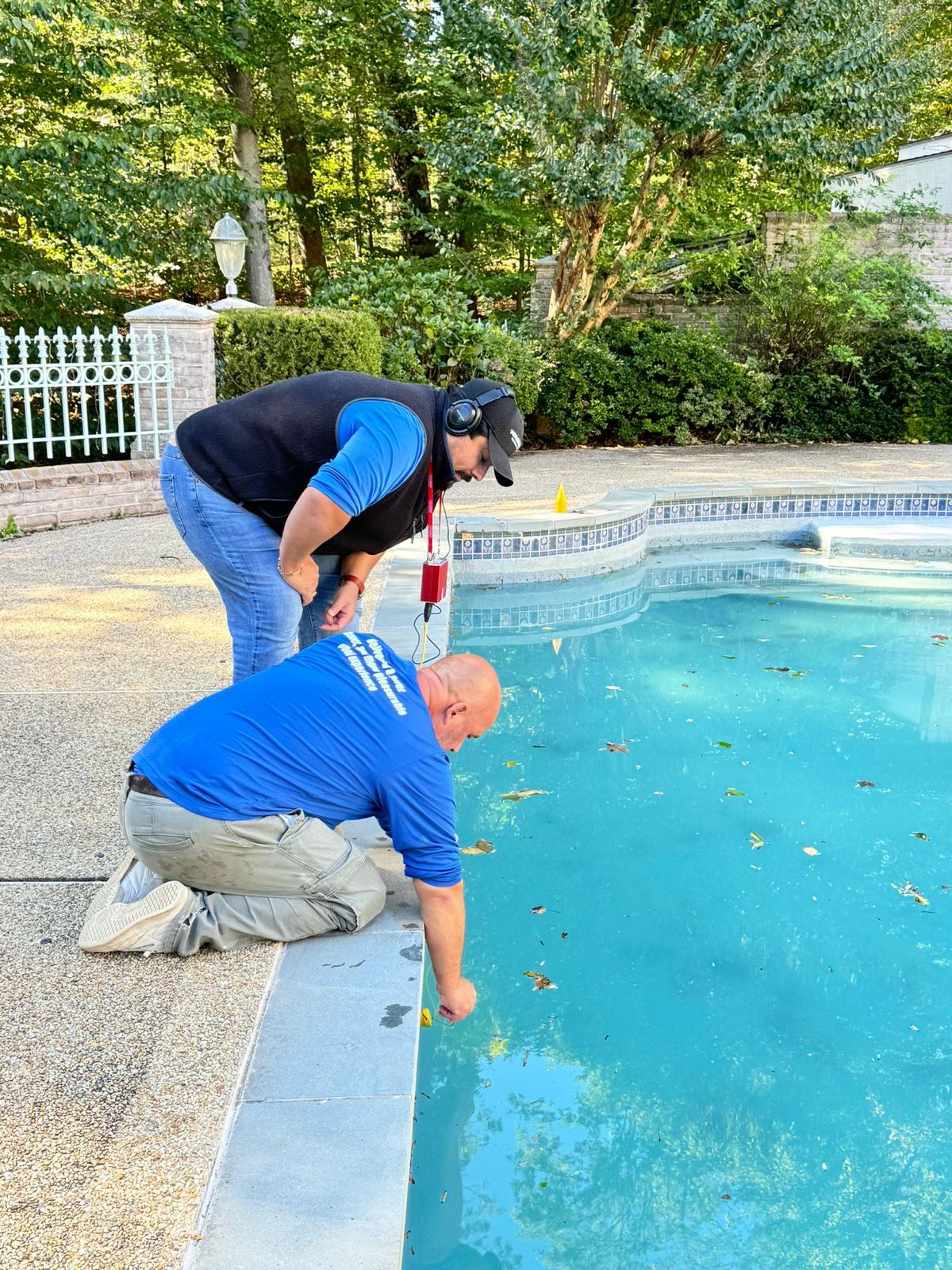
Once a leak is suspected, it usually takes professional equipment to locate it precisely.
That process may include:
Pressure testing plumbing lines
Dye testing around fittings and cracks
Electronic listening equipment
Water level testing to confirm loss
Advanced methods for underground leaks
The goal isn’t just to confirm a leak, but to pinpoint exactly where it is.
In most cases, no.
Small surface issues might be patched temporarily, but most leaks involve:
Underground plumbing
Structural components
Specialized tools
Trying to guess or DIY the repair often leads to more damage or unnecessary work.
If your pool is losing water consistently, don’t wait.
A simple plan:
Run the bucket test
Monitor your water level
Look for obvious signs
Call a professional if it continues
The sooner you confirm it, the easier and cheaper it is to fix.
Pool leaks aren’t always obvious, but they’re rarely harmless.
What looks like normal water loss can slowly turn into higher bills, damaged equipment, and costly repairs.
The key is catching it early and confirming it the right way.
If something feels off with your pool, it’s worth checking before it becomes a bigger problem.
Losing more than 1/4 inch of water per day may mean a leak
The bucket test is the easiest way to confirm it
Leaks can come from plumbing or the pool structure
Ignoring leaks leads to higher costs and damage
Professional detection is the most accurate way to fix the issue
Ed Garcia is the owner of Paradise Pool Service LLC, a family-owned pool service company based in Fairfax, VA. With over 20 years of hands-on experience servicing residential and commercial pools across Washington DC and Northern Virginia, Ed leads a team trusted by 150+ pool owners across the DMV area.