
CPO Certified Pool Operator and Owner of Paradise Pool Service LLC
Published
·
Updated:
·
CPO Certified Pool Operator and Owner of Paradise Pool Service LLC
Published
·
Updated:
·
Heavy rain can undo days or even weeks of pool maintenance in a matter of hours.
While rainwater itself is not harmful, storms often introduce dirt, debris, contaminants, and water chemistry changes that affect pool clarity and sanitation.
Many homeowners wait until the pool starts looking cloudy before taking action. By then, algae growth and filtration problems may already be developing.
The good news is that a few simple maintenance steps can help restore your pool quickly after a storm.
Rain changes more than just the water level.
Storms can introduce:
Dirt and mud
Leaves and organic debris
Pollen
Insects
Fertilizer runoff
Contaminants from surrounding surfaces
At the same time, heavy rainfall can dilute chlorine and other important chemicals that help keep the pool clean.
This combination often leads to cloudy water, algae growth, and filtration issues if not addressed quickly.
Start by removing any visible debris as soon as possible.
Focus on:
Leaves
Branches
Insects
Grass clippings
Floating organic material
The longer debris sits in the water, the more contaminants it releases into the pool.
Removing debris early reduces the workload on both your filter and sanitizer.
Storm debris often fills baskets faster than normal.
Check and clean:
Skimmer baskets
Pump baskets
Leaf traps
Full baskets restrict water flow and reduce circulation efficiency.
Good circulation is essential when restoring water quality after heavy rain.
Rainwater can dilute key chemical levels.
Test the following:
Free chlorine
pH
Total alkalinity
Cyanuric acid
Calcium hardness
Many pools require chemical adjustments after a major storm because sanitizer levels often drop significantly.
Testing before adding chemicals helps prevent overcorrecting the water balance.
One of the most important post-rain maintenance steps is restoring proper sanitizer levels.
Heavy rain often lowers chlorine because:
Water becomes diluted
Contaminants increase chlorine demand
Organic debris consumes sanitizer
If chlorine levels have dropped, add the appropriate amount needed to return the pool to proper operating levels.
This helps prevent algae and bacteria from gaining a foothold.
Even if the pool looks clean, contaminants can cling to walls and steps after a storm.
Brush:
Pool walls
Steps
Corners
Waterline areas
Low-circulation zones
Brushing loosens debris and prevents algae from attaching to surfaces while the filtration system works.
Heavy rain often causes dirt and debris to settle on the bottom of the pool.
Vacuuming helps remove:
Mud
Fine sediment
Leaves
Organic material
Dead contaminants
Removing debris quickly prevents it from breaking down and affecting water quality further.
After a storm, the filtration system needs extra time to remove suspended particles.
Consider increasing pump runtime to help:
Improve circulation
Remove contaminants
Distribute chemicals evenly
Clear cloudy water
The goal is to give the filter enough time to capture the additional debris introduced by the storm.
Your filter does most of the heavy lifting after rainfall.
Check for:
Increased pressure
Reduced water flow
Excess debris buildup
Dirty filter media
Depending on your system, this may involve:
Cleaning cartridges
Backwashing a sand filter
Cleaning DE grids
A clean filter helps restore water clarity much faster.
Some storm-related problems take time to appear.
Continue monitoring:
Water clarity
Chlorine levels
Filter pressure
Algae development
Debris accumulation
Small issues are much easier to correct when caught early.
Many homeowners accidentally create bigger problems after storms.
Common mistakes include:
Ignoring water testing
Leaving debris in the pool
Not cleaning the filter
Waiting too long to restore chlorine
Assuming rainwater is harmless
Prompt maintenance usually prevents most post-storm water quality issues.
Some pools require more aggressive cleanup after severe storms.
Watch for:
Cloudy water
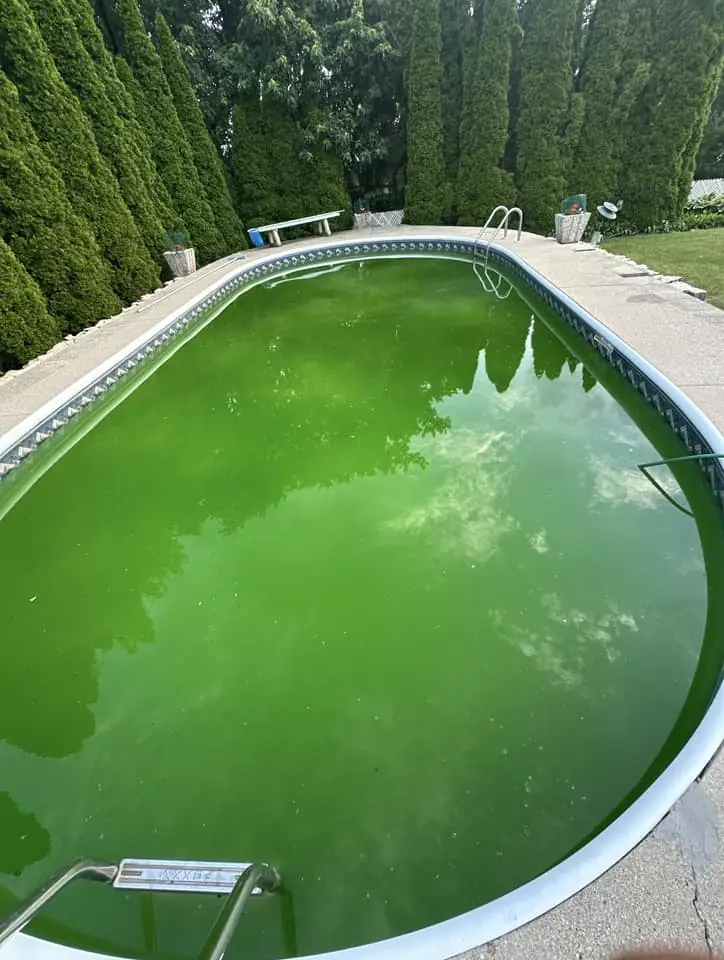
Green tint developing
Slippery pool surfaces
Strong odors
Rising filter pressure
Large amounts of settled debris
These signs often indicate that contaminants are overwhelming the pool's normal maintenance routine.
Most pools recover quickly with proper maintenance, but some storms create larger problems.
You may need professional assistance if:
Water remains cloudy for several days
Algae begins spreading
Filtration problems develop
Water chemistry will not stabilize
Equipment performance changes
Professional treatment can often restore water quality faster when storm damage becomes more severe.
Heavy rain can affect pool water much more than most homeowners expect. Diluted chemicals, debris buildup, and increased contaminants all put extra stress on the pool system.
The best approach is to act quickly. Remove debris, test the water, restore sanitizer levels, and support the filtration system before problems have a chance to grow.
A little extra maintenance after a storm can prevent days of cleanup later and help keep your pool clean, clear, and ready to enjoy.
Ed Garcia is the owner of Paradise Pool Service LLC, a family-owned pool service company based in Fairfax, VA. With over 20 years of hands-on experience servicing residential and commercial pools across Washington DC and Northern Virginia, Ed leads a team trusted by 150+ pool owners across the DMV area.