
CPO Certified Pool Operator and Owner of Paradise Pool Service LLC
Published
·
Updated:
·
7 min. read
CPO Certified Pool Operator and Owner of Paradise Pool Service LLC
Published
·
Updated:
·
7 min. read
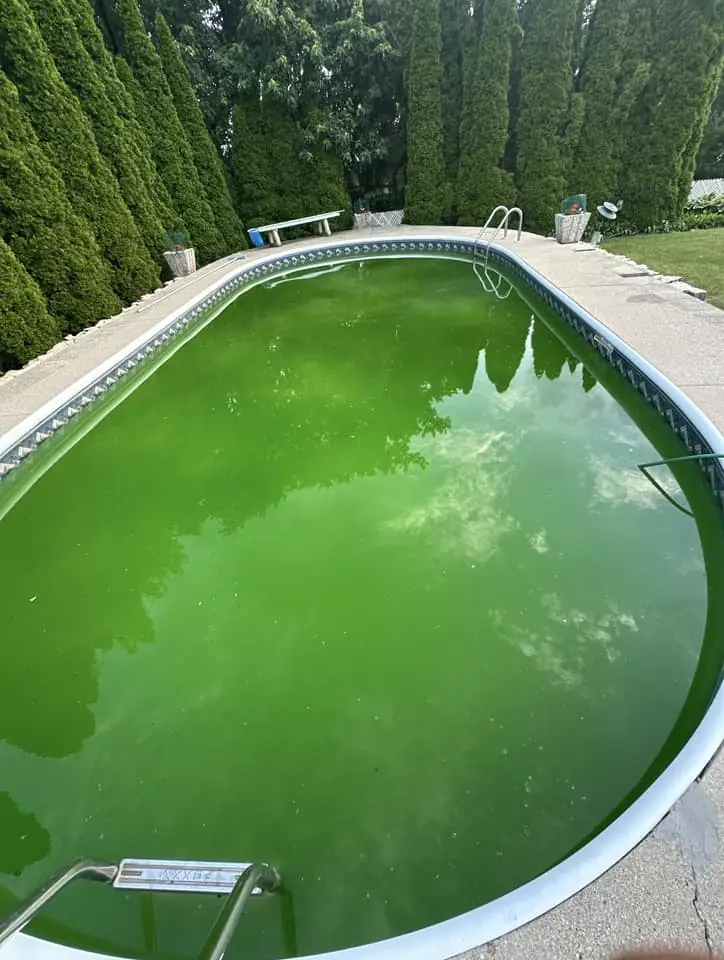
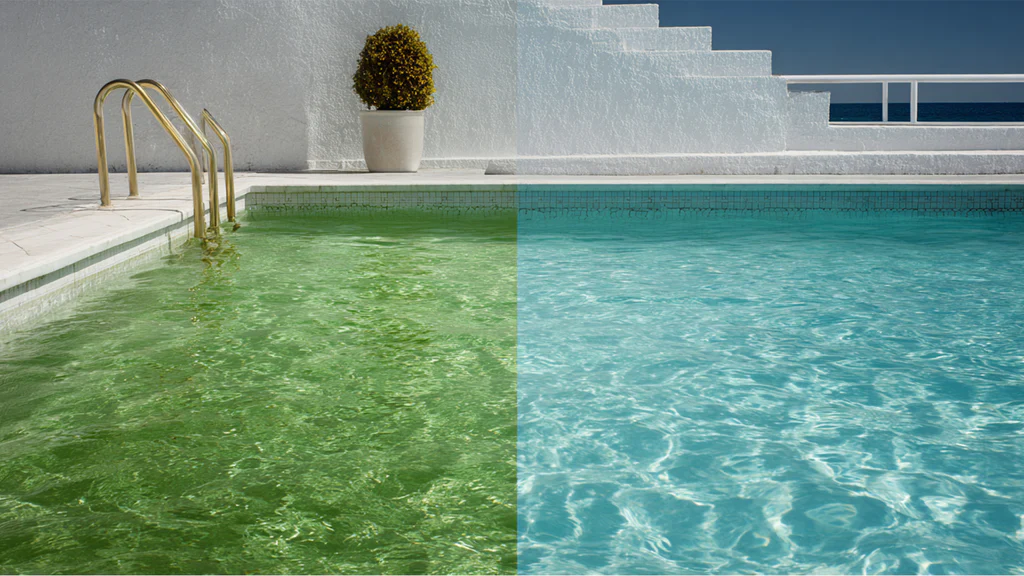
A pool can go from clear to green in under two days, and once algae takes hold it will not clear on its own. Most owners respond by dumping in shock, waiting, and then getting frustrated when the water is still cloudy three days later.
The reason is that killing algae and removing algae are two different jobs. Shock kills it. Brushing exposes it so the chlorine can reach it. The filter is what actually takes it out of your water. Miss any one of those and you either stay green or go green again within a week.
This article walks through the full removal process in the order it needs to happen, how much chlorine each type of algae actually takes, what the water should look like on each day of treatment, and the reasons algae comes back so you can stop it happening again.
Algae in your pool means your chlorine ran out
Pool shock is what kills algae, filtering removes it
Unbrushed algae survives any amount of chlorine
High stabilizer makes your chlorine stop working
Pump must run 24/7 until water clears
Type | Looks Like | Difficulty | Time to Clear |
|---|---|---|---|
Green | Cloudy green water, slippery walls | Easiest | 2 to 5 days |
Yellow / Mustard | Dusty yellow patches in shady spots | Moderate | 4 to 7 days |
Black | Dark spots with raised heads, rough to touch | Hardest | 1 to 2 weeks |
Green algae floats freely in the water. Yellow and black algae root into plaster and grout, which is why they take longer and come back if you rush the job.
Adding chlorine to a pool with bad chemistry wastes money and does nothing.
Chlorine loses half its strength above 7.6 pH
Cyanuric acid over 100 ppm locks chlorine up
Low alkalinity lets pH swing back overnight
A clogged filter returns dead algae to the water
Fix all four before opening a single container of shock. Your targets:
pH: 7.2 to 7.4
Cyanuric acid: 30 to 50 ppm
Total alkalinity: 80 to 120 ppm
Free chlorine: near zero, which is expected
Do these in order. The order is what makes it work.
Test and correct pH to 7.2 to 7.4
Backwash or clean the filter
Brush every surface including walls, floor, steps, and behind ladders
Shock the pool after sunset
Run the pump non stop for 24 hours
Brush again the next morning
Test chlorine and re shock if it dropped below 5 ppm
Repeat until chlorine holds steady overnight
Vacuum dead algae to waste if there is heavy debris
Clean the filter again once the water is clear
The CDC baseline for a safe residential pool is free chlorine of at least 1 ppm with pH between 7.2 and 7.8. That keeps a clear pool clear. It is nowhere near enough to kill an active bloom, which needs far higher levels held over several days.
Green algae needs roughly 10 to 12 ppm
Yellow algae needs 15 to 20 ppm
Black algae needs 20 ppm held for days
Top chlorine back up as it drops
Nobody swims until chlorine falls under 4 ppm
The moment chlorine stops dropping overnight is the moment the algae is dead. That is your finish line, not a set number of days.
Because sunlight destroys unstabilized chlorine within hours, so a daytime dose is half gone before it does any work.
Daylight can destroy half your shock dose
Pump must be running while you pour
Dissolve granular shock in a bucket first
Never mix two different shock products together
Leave the pump running all night long
These three steps do completely different jobs, and skipping any one is why most treatments fail.
Shock kills it
Raises chlorine high enough to destroy algae cells
Cannot reach algae sitting under a protective slime layer
Brushing exposes it
Breaks the slime coating so chlorine can make contact
Pulls rooted algae out of plaster and grout lines
Stainless steel brush for concrete or plaster, nylon only for vinyl or fiberglass
Brush daily during treatment, weekly after
Filtering removes it
Dead algae stays in the water and is what makes a pool cloudy grey
Pump runs 24 hours a day until the water is clear
Filter needs cleaning or backwashing daily during treatment
Clarifier or flocculant helps if water stays cloudy after chlorine holds
Knowing what normal progress looks like stops you giving up two days too early.
Day 1: still green, the chlorine is working
Day 2: cloudy grey, which means algae died
Day 3: hazy but lighter, chlorine holds longer
Day 4 to 5: clear water, chlorine barely drops
Still green on day 3 points to stabilizer too high, a clogged filter, or chlorine not held high enough.
Algae returning within two weeks means the cause was never fixed, not that the treatment failed. Worn filter media is a common culprit, along with:
Chlorine dropped below 1 ppm at some point
Pump hours too short to turn water over
Dead spots behind steps and ladders get nothing
Stabilizer crept high from weekly chlorine tablets
Storms and pollen strip chlorine fast in Virginia
Some blooms cost more in wasted chemicals than a service visit would have cost.
Black algae regrows from a single surviving root
Still green after three days of treatment
You cannot see the shallow end bottom
Stabilizer over 100 ppm needs a partial drain
The same bloom returns every single season
Clearing algae comes down to sequence: correct the chemistry, shock hard after dark, brush every surface, and filter around the clock until chlorine stops dropping. Do it in that order and even a badly green pool clears within a week.
Paradise Pool Service LLC has been clearing green pools across Fairfax, McLean, Arlington, and Washington DC for over 20 years, with same day response for urgent situations and a free on site quote before any work begins.
How long does it take to clear a green pool?
Can I swim in a pool with algae?
Will shock alone clear my pool?
Why is my pool cloudy after shocking?
How much shock do I need for a green pool?
Ed Garcia is the owner of Paradise Pool Service LLC, a family-owned pool service company based in Fairfax, VA. With over 20 years of hands-on experience servicing residential and commercial pools across Washington DC and Northern Virginia, Ed leads a team trusted by 150+ pool owners across the DMV area.