
CPO Certified Pool Operator and Owner of Paradise Pool Service LLC
Published
·
Updated:
·
CPO Certified Pool Operator and Owner of Paradise Pool Service LLC
Published
·
Updated:
·
Vacuuming is one of the most overlooked parts of pool maintenance.
Some pool owners vacuum too often and waste time. Others barely do it at all and wonder why their water stays cloudy or debris keeps returning.
The truth is, vacuuming is not just about appearance.
It helps remove debris before it affects water chemistry, clogs filtration, or creates algae problems.
Let’s break down how often you should vacuum your pool, what affects the schedule, and the signs your pool needs more attention.
Vacuuming removes debris that your skimmer and filter cannot fully handle.
This includes:
Leaves
Dirt and sand
Dead algae
Small debris sitting on the floor
Organic buildup
Even if your water looks clean, debris often settles at the bottom where circulation is weaker.
Vacuuming helps prevent buildup from turning into larger water quality problems.
For most residential pools, vacuuming once per week is enough.
This keeps debris under control and prevents buildup from accumulating on the surface.
However, some pools need more frequent vacuuming depending on:
Weather conditions
Nearby trees or landscaping
Pool usage
Algae issues
Type of pool system
The cleaner your environment and water balance, the less often deep vacuuming is needed.
There is no single schedule that works for every pool.
Some pools need vacuuming multiple times per week.
Others can go longer between cleanings.
Common factors include:
Heavy leaf or debris exposure
Storms or windy weather
High swimmer activity
Poor circulation
Algae outbreaks
Pools near construction or dusty areas
If debris is constantly settling on the bottom, weekly vacuuming may not be enough.
Most pools show clear signs when vacuuming is overdue.
Look for:
Visible dirt collecting on the floor
Cloudy water after movement
Debris returning quickly after cleaning
Algae starting in corners or low-circulation areas
Fine particles the skimmer is not catching
If debris stays in the pool too long, it begins affecting water chemistry and filtration performance.
This is where many pool owners overdo it.
You do NOT need to vacuum daily unless:
Your pool gets heavy debris regularly
You recently had an algae problem
You are cleaning after a storm
You manage a high-traffic commercial pool
Over-vacuuming does not necessarily make the pool cleaner.
Good circulation, filtration, and chemistry reduce how much manual cleaning is needed.
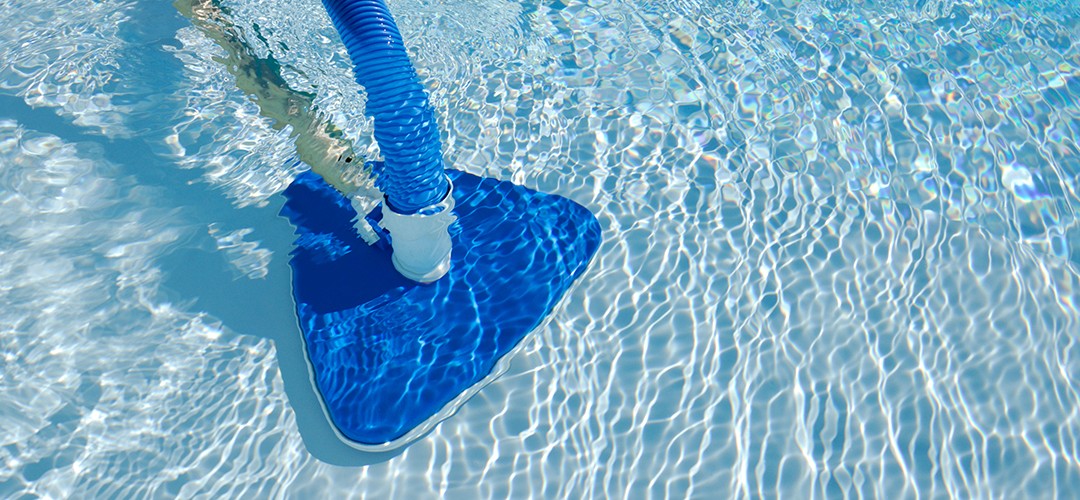
There are two main ways pools get vacuumed.
Manual vacuuming gives more control and is better for:
Heavy debris
Spot cleaning
Algae cleanup
Deep cleaning problem areas
It takes more time but removes debris more thoroughly.
Automatic cleaners help maintain cleanliness between manual cleanings.
They work well for:
Routine maintenance
Light debris
Consistent upkeep
However, they still require maintenance and do not fully replace deep cleaning.
Skipping vacuuming creates problems slowly over time.
Common issues include:
Cloudy water
Increased algae growth
Poor water circulation
Clogged filtration systems
Staining on pool surfaces
Higher chemical demand
Debris that sits too long eventually breaks down and affects overall water quality.
Most professionals recommend vacuuming:
Once per week
Before adding major chemicals
After storms or heavy debris
Before brushing or deep cleaning
Vacuuming before chemical treatments helps improve water circulation and cleaning efficiency.
Vacuuming is only one part of proper pool care.
To reduce debris buildup:
Keep baskets clean
Maintain water chemistry
Brush surfaces regularly
Run filtration properly
Trim nearby landscaping when possible
Good maintenance reduces how hard your vacuuming routine needs to work.
A lot of pool owners unintentionally make vacuuming less effective.
Common mistakes include:
Vacuuming too quickly
Ignoring corners and steps
Not brushing before vacuuming
Running dirty filters
Vacuuming during active algae blooms without treatment
Proper technique matters just as much as frequency.
If vacuuming is not solving the problem, the issue may not be debris alone.
Start by checking:
Water chemistry
Filter condition
Circulation issues
Hidden algae growth
Fine particle buildup
Sometimes cloudy or dirty-looking pools are caused by filtration or chemical problems rather than surface debris.
Most pools should be vacuumed about once per week, but the right schedule depends on your environment, usage, and maintenance habits.
Vacuuming helps prevent bigger water quality problems before they start.
When combined with proper filtration, balanced chemistry, and regular cleaning, it keeps your pool cleaner, healthier, and easier to maintain long term.
Ed Garcia is the owner of Paradise Pool Service LLC, a family-owned pool service company based in Fairfax, VA. With over 20 years of hands-on experience servicing residential and commercial pools across Washington DC and Northern Virginia, Ed leads a team trusted by 150+ pool owners across the DMV area.